




Archive for June, 2015
by Nancy E. Hassel, LIPetPlace.com
Did you know that not all dogs can swim? Most people think that swimming comes naturally to dogs. We have all seen the funny videos of little dogs doing the doggie paddle in the air when held above the bath water by their owners, but that movement doesn’t mean they will be able to swim, stay afloat or tread water.
Being on an Island, dog owners should consider this when out at the beach, near a lake with their dogs, or hanging out by the pool. We are lucky in this day and age there are life jackets made for dogs, scamper ramps to help dogs out of a pool and dog trainers willing to teach dogs to swim. But that doesn’t mean your dog is going to like it or have a swimming technique come naturally to them.
Some things dog owners should never do when trying to get your dog to swim, is force your dog into the water by dragging or throwing a dog in. It’s not only cruel, but can scare a dog or make the dog fearful of water.
If you have a puppy, you want to start young introducing the pup to the water, always, always monitored by an adult and never left alone near a body of water. Keep the puppy leashed, and it you have a dog life jacket (properly fitted for the dog’s size), have the puppy wear it. You can get the puppy accustomed to wearing it, by having the dog wear the vest for a few minutes at a time while indoors or on a short walk. While the puppy is leashed you can go into a pool or in the calm water on a shore and just have the pup wade in the water along side of you. Let the dog go in on its own or if you have a dog or friend with a dog that likes the water – that will often help your puppy have less fear.
When teaching the puppy how to swim, make sure that you eventually take the life vest off during lessons for short periods of time, so the dog learns to become buoyant on their own. Owners can assist by helping hold up the dog’s body from the mid to back section of the dog:
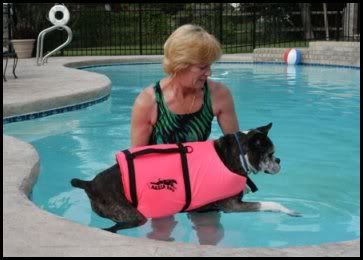
Photo credit, American Boxer Club.
Some dog breeds do take much more naturally to the water as that is what they were bred for. Labs, Goldens, Portuguese Water Dogs, Chesapeake Bay Retrievers, to name a few are natural water dogs, but they still may need help along the way learning. Some breeds are not designed for long swims or swimming at all. My Pit Bull Cody, is an just learning to swim, but his mouth is so wide that he can inadvertently swallow a lot of water while swimming. Which can make him sick, so his swim time is never more than 10 to 15-minutes, and that is in and out of the water.
If you are unsure how to teach your dog to swim, the best thing to do is to hire a skilled dog trainer who knows how to do this properly. (Interview the trainer to be sure they know how to teach this). In teaching a dog to swim it’s best to be in the water with the dog as some dogs can panic, and you or the dog trainer can help assist them out.
Another thing to consider is if you are at the ocean beach, be careful of throwing a ball or stick into rough surf – this could easily knock down a dog and injure the dog. Dogs can easily be tossed around by a wave. Some bay beaches have a quick drop off, and if your dog is not used to swimming, a deep drop off can be dangerous. While we all want our dogs to cool off, not every dog is suited to swim. So take steps to enjoy the water with your dog, but safety first!
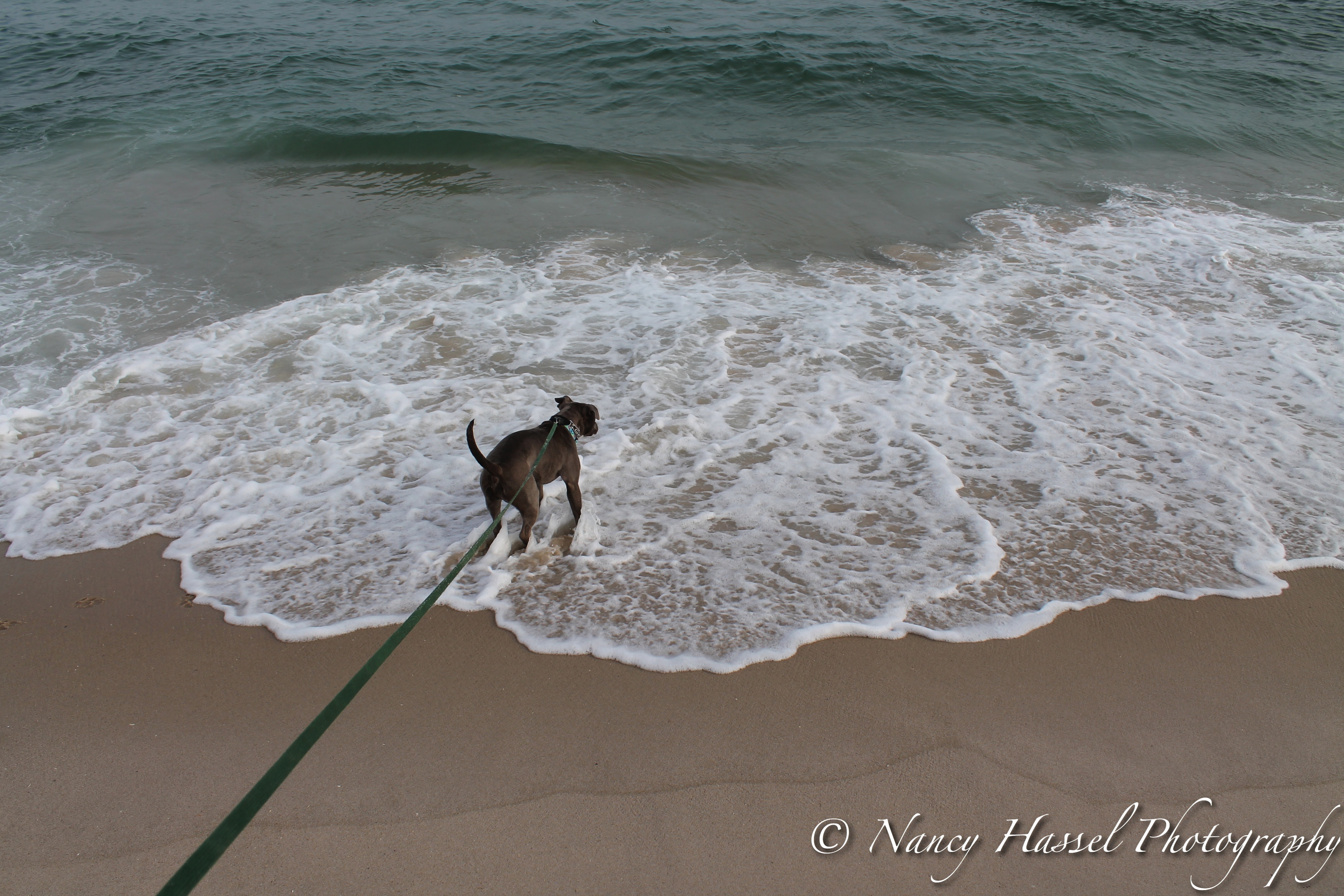
Cody was on a long line and I did not let him into the waves.
The life jacket can also be a safety precaution while out kayaking, boating or paddle boarding with your dog. Also a long line, not a retractable leash, a long leash made of cotton that can be purchased at most pet stores in 10, 15, 25 and 50 in length, is a great tool while teaching a dog to swim. If the dog is over enthusiastic and not on a leash the dog can keep going and going. Believe me I have witnessed this in person. Funny at first, scary when the dog was pretty far out into the bay, luckily for the owner the dog turned and finally headed back. If the owner had a long line, he could have gently pulled the dog back towards the shore.

by Nancy E. Hassel, LIPetPlace.com
Did you ever think about safety while walking your dog at night? Now that it is summer time and walking in the evening can be a great time to take your pup for a long walk since it is cooler in the evening. Don’t forget that while when you leave it may have been light out and on your way back it is dark out.
It amazes me how many people run, bike, or walk their dogs in the darkness of night without any reflective or light colored clothing on them or their pets.
Recently while walking my dark grey (blue if you will) dog, in the late evening, I put an LED color on him knowing it would be dark upon our walk back. I lit that collar up when it got dark so, even though he was on a 6-foot leash and we were on the sidewalk for 90% of the walk, he would be more visible with the collar on while walking next to me. Here on Long Island the summer brings out complete idiot drivers, (have you noticed or am I getting old?), especially at night. People fly around corners, don’t stop at stop signs – and don’t look either way. So here are some simple tips to help keep you and your dog safe while walking on a beautiful summer night!
1. Get an LED collar, (and leash), for your dog. They are becoming more popluar and can blink or hold a steady light and make your dog more visible.

Cody walking with me at night. You wouldn’t see him without that collar!
2. Just because your dog is now visible with his LED collar or leash – don’t let your own common sense fly out the window! Teach your dog to wait, sit and stay at every corner. I have only had my dog for 7-weeks, (out of the shelter) and he already does this. (Good boy Cody!) So you can safely cross the street after you looked both ways. AND in case someone is flying up to the stop sign or street corner – you do NOT want your dog out ahead of you! (Same goes for baby strollers, HELLO? I see that all the time and cringe!)
3. DO NOT USE retractable leashes at night. If your dog is zipped out 20-feet ahead of you, even if he is up into some bushes or ‘taking care of business’ and you have to get him out of harms way – you will NOT be able to fast enough. And that skinny little line is hardly visible when you are a distance away, and likely a driver is not going to see your dog. Enough said, right?
4. Be sure your dog is microchipped and has a proper ID tag on him with proper contact number. Your cell number is best because let’s face it we don’t often change our cell number’s. But a back up number or email is a good idea on that tag if you can fit it.

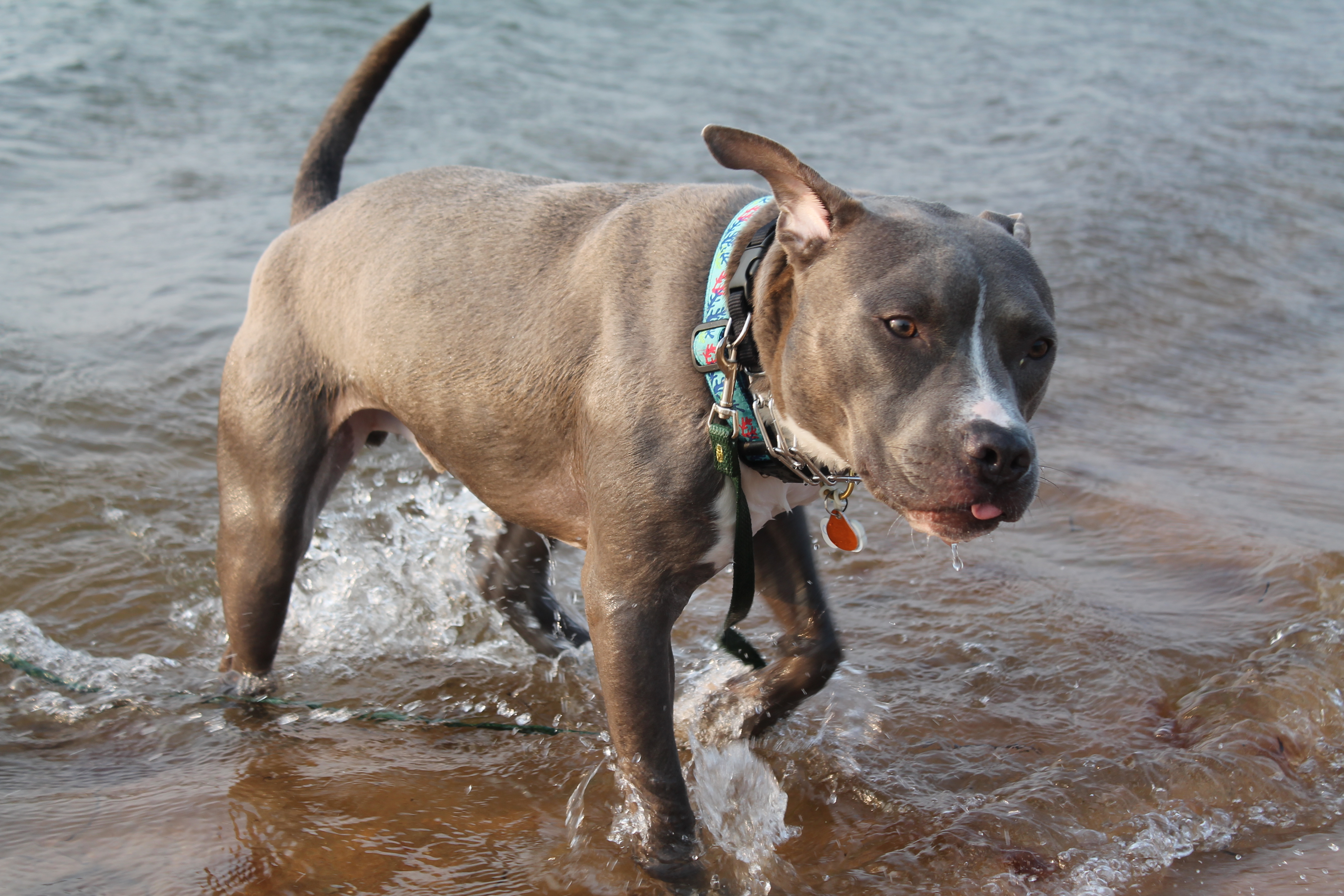
5. Have a yard? Check your gates! Maybe you just came back from a walk and decide to let Buster take a romp in the yard, but your husband, kids or landscaper left the gate open – now it is night, dark and your dog is out of the yard.
6. No sidewalk to walk with your dog? You should have light clothing on and a flashlight and be careful when walking on the side of the road! Or find a safer area to walk your dog at night that has a sidewalk.
7. This seems like a no-brainer, but be sure your cell phone is charged fully when you set out to leave for your walk. Just in case you need it for the flash light, to make a call, etc.

Enjoy the summer evening walks with your dog and just keep these tips in mind. Do you do anything in addition to these tips? We would love to hear it in the comment section below!
by Nancy E. Hassel, LIPetPlace.com
Every dog I have ever had has been a grass eater. Some more than others – and the old saying, ‘he’s eating grass because he doesn’t feel well’ had nothing to do with why my dogs ate grass. My doberman Shanna, ate grass daily – and she taught my other dog, my pit bull Max – and he grazed like a cow. I used to call him Moo Cow – with his coloring it was fitting.
I couldn’t stop them from eating it – and it really seemed like more of a habit than anything else. I did worry a bit about them eating it, due to fertizliers in the grass and Max did get sick once from eating a brown mushroom in my yard – luckily it was a small one and he was 62 lbs. He was ok, after a visit to the vet and meds, but that made me more diligent about checking to see if there were any shrooms growing in the grass.
My newly adopted dog Cody has started to eat grass a few weeks ago, (and some sticks), with training he is learning to drop the sticks and not eat them – but the grass he still likes to take a bite of. So what to do? How do I get him to stop?
When I was at Global Pet Expo in March, one of the booths I stopped at was Pet Greens and I always thought that the grass they had was just for cats. After speaking with the rep their he told me about the different grasses they had and how dogs can eat them to. Best part? Well a few actually, but first they are certified organic and you can grow them conviently at home. Fun and cool at the same time. Remember growing sunflowers or seedlings as a kid in school? Kind of like that, and for those of you that don’t have a green thumb – don’t worry anyone can grow this grass.

The grass comes in this super easy ‘Self Grow’ bag – and all the seeds and soil you need. All you have to do is poke 10 holes in the bottom of the bag, put the seeds about 1/4 inch below the soil and water!

Looks like this after your prepare it.
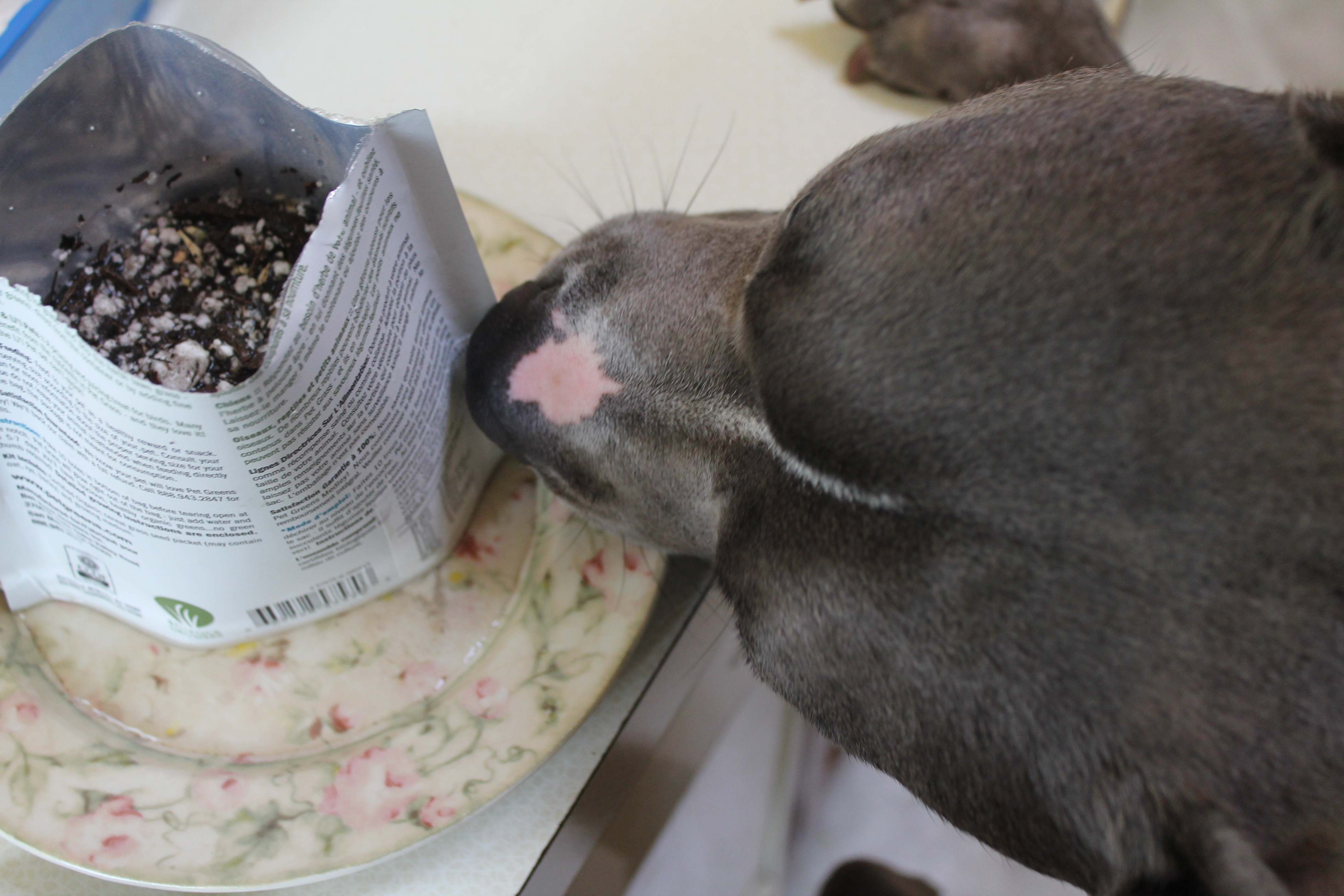
Cody was inspecting my preparation!
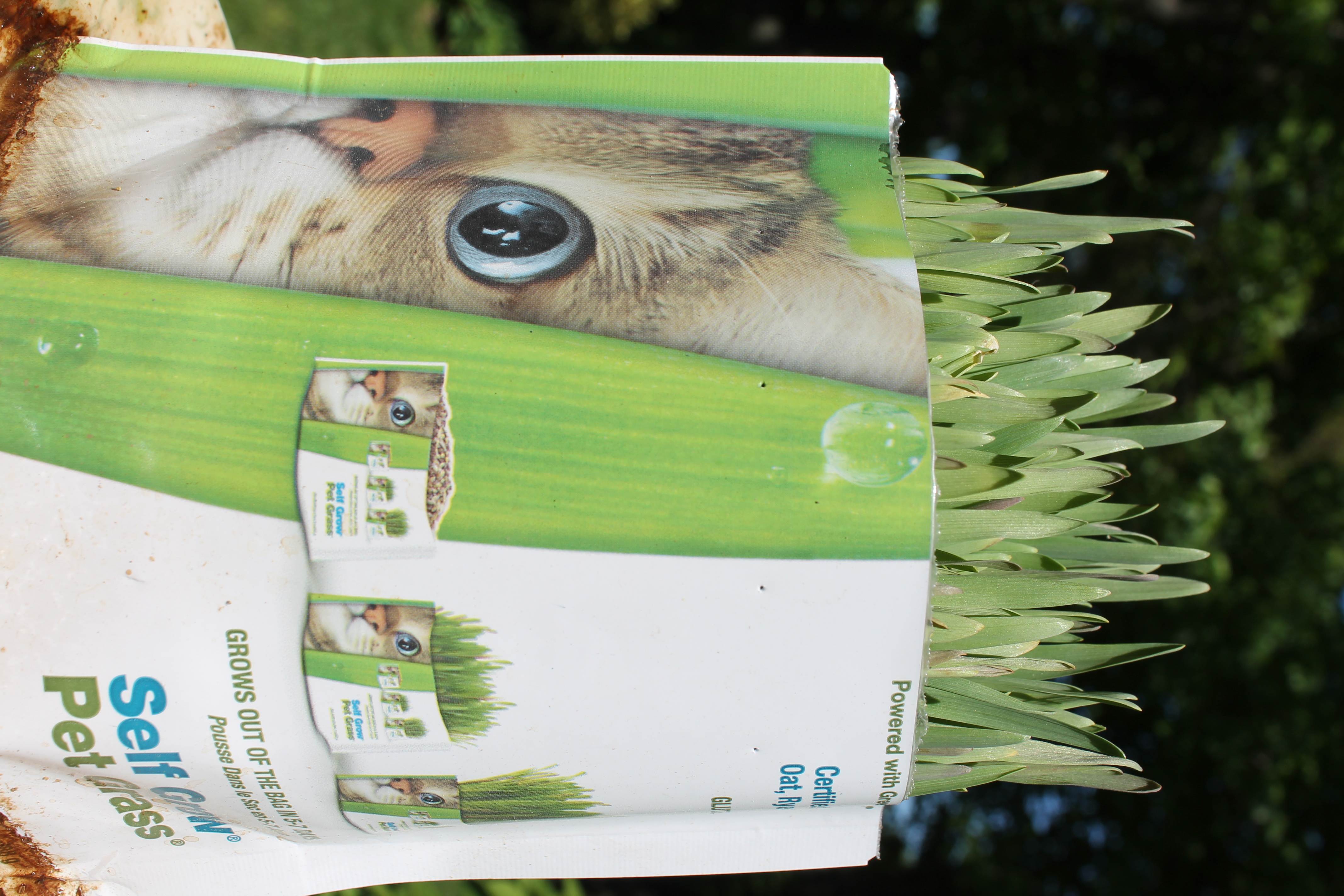
It took about 4 days, which is pretty fast, until I noticed the seeds were sprouting, and probably another four until I had this result. Now I just break off a handful and give it to Cody, he loves it. And this grass is Oat, Rye and Barley grass – and organic of course. You can grow this right in your window sill or outside near your other seedlings. I recommend putting a dish or plastic garden container under as you are watering it and did put holes in the bottom of the bag! It grows pretty quickly so even after you have tore off or cut of the grass, in about 2 days it’s ready to go again.
So now Cody gets a small snipping of this organic grass, probably every 2-days or so. I have to say he is still eating some grass outside, but it is definitely less than he was.
I really like this product – and for those cat owners out there, they have different varieties of grass you can grow and your cats can safely chew on and eat as well. What do you think? Have a grass grazer at home?
Categories
Archives
Blogroll
Meta