




Archive for 2010
May 17, 2010
By Michel Selmer, DVM of www.AdvancedCareForPets.com
Homeopathic Alternative to Vaccines
The purpose of vaccination is to protect your pet from potentially fatal infections by pathogenic (disease-causing) viruses such as distemper, rabies,and others. The way this is done is to inject either a killed or a “modified” (non-pathogenic) live virus, which sensitizes the immune system to that particular virus. Thereafter, if your dog or cat is exposed to, let’s say, parvo virus, s/he will be able to respond quickly and vigorously, producing antibodies to overcome the infection. This sounds like a pretty good plan, on the surface. However, as with any medical procedure, we must ask the simple and direct questions, “Is it safe? Is it effective? Do the benefits outweigh the risks?”
The Problems with Routine Vaccinations
Not surprisingly, most of the problems involve the immune system. After all, the immune system is what vaccines are designed to stimulate. But they do so in a very unnatural way that can overwhelm and confuse the immune system. The body may overreact to normally harmless substances (allergies, especially flea allergies and other skin problems), or even produce antibodies to itself (autoimmune disease). At the same time, the body may be sluggish in responding to those things that it should reject, such as common viruses, bacteria, fungi, and parasites. This can result in increased susceptibility to acute infections (such as ear infections in dogs, bladder infections in cats), chronic tapeworm problems, or in more degenerative cases, cancer.
What alternative is there?
The big question has always been: What alternative is there? Despite these potential problems, vaccination must surely be preferable to losing puppies and kittens to distemper, parvo, and other fatal diseases! Until recently, there have been no practical alternatives, so the short term benefits of vaccination have seemed to outweigh the long term risks. Now, however, there is a safe and effective alternative to vaccination: homeopathic nosodes. Like vaccines, nosodes sensitize the body to a particular virus, so the immune system can react quickly and effectively to natural exposure. Nosodes are at least as effective as vaccines, and in some cases have been shown to be significantly more effective than vaccines in preventing infection. The biggest advantage of nosodes over vaccines is the fact that they are completely safe. There are no risks or side-effects whatever. And they can be safely given to puppies and kittens much earlier than vaccines can. In fact, the mother can be treated before she gives birth, giving the puppies or kittens protection from the moment they are born. Nosodes, like all homeopathic remedies, are very easy to administer: they are given by mouth, and don’t even need to be swallowed. They are also very economical – far less expensive, in fact, than vaccination.
Limitations of Nosodes
There are some limitations to the use of nosodes. Rabies vaccination for dogs is required by law in most counties, and the rabies nosode, called Lyssin, will not satisfy that requirement. You should know, however, for the health of your animal, that all vaccines, including rabies are legally and medically approved for use in healthy animals only! So if your dog is showing any signs of acute or chronic disease, s/he is exempt from that requirement and should not be vaccinated. Despite the obvious advantages of nosodes, most boarding kennels and veterinary hospitals will not accept them in lieu of vaccination. If you need to board your dog or cat in a boarding kennel or veterinary hospital, you may be forced to have him/her vaccinated. This is a problem that will hopefully improve with time as more kennel owners and veterinarians become familiar with nosodes.
If You Decide to Vaccinate
As a veterinary homeopath, I do not recommend routine vaccination for dogs or cats, except for rabies, (which is requied by New York State Law), in health dogs. If, for whatever reason, you decide that you must vaccinate your pet, I would make the following recommendations:
- Never vaccinate an animal with symptoms of acute or chronic health problems, or at the time of surgery or any other physical or emotional stress.
- For adult dogs and cats, vaccinate every 2-3 years, instead of yearly.

May 17, 2010
By Nancy Hassel, LIPetPlace.com
The 2nd Annual Canines for a Cure, held on Sunday May 16th, was a wonderful success. Over 200 owners and their dogs were in attendance, and many of the pups dressed up for the “best dressed” dog contest. The walk raised awareness and funds for the Long Island Chapter of the Leukemia and Lymphoma Society who hosted the event. The day started out with a very curious goose greeting the vendors setting up and went to each table to check out what was going on. It was joked that the goose needed a bandana for the walk.
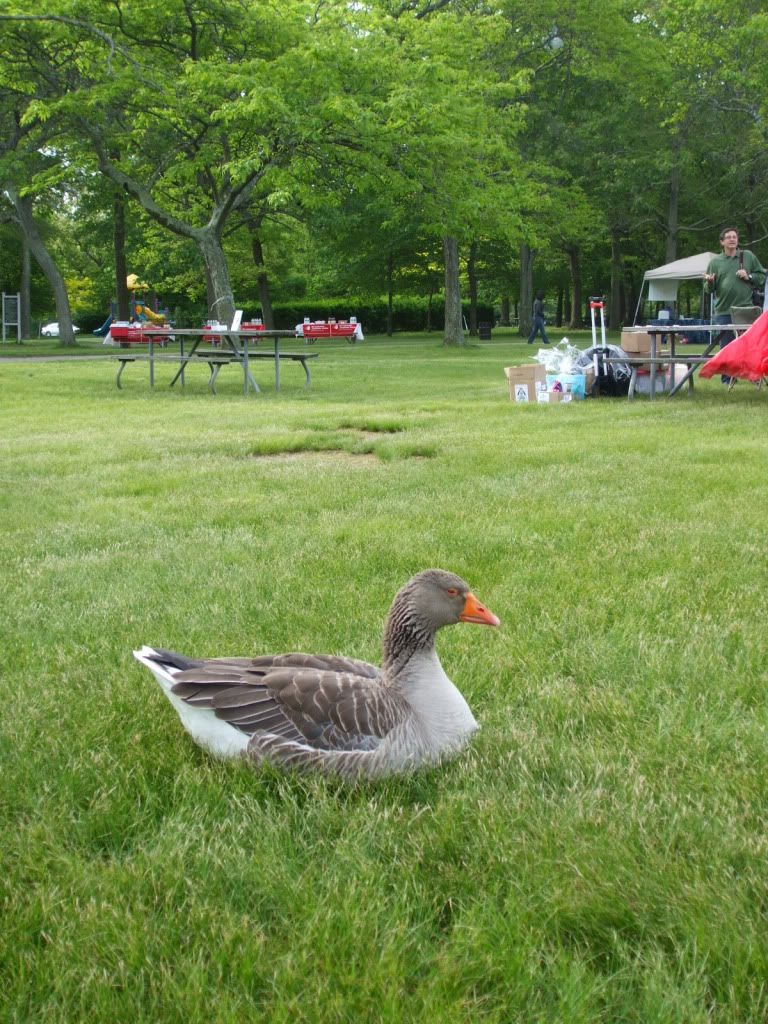 As you can imagine the goose took off when many of the dogs started to show up. Smart bird!
At 10:15am everyone got ready for the kick-off and drum roll for the walk around beautiful Belmont Lake State Park. The crowd started with cheers, and a couple of ‘woofs’ and off they went. The entire day was filled with great music from the band, Checkered Past, who rocked out and there was even some dancing going on! The event was a special day for many people and teams of walkers who were there with survivors of this disease or in remembrance of a loved one lost. A meaningful and fun way to show their commitment to show support of anyone afflicted.
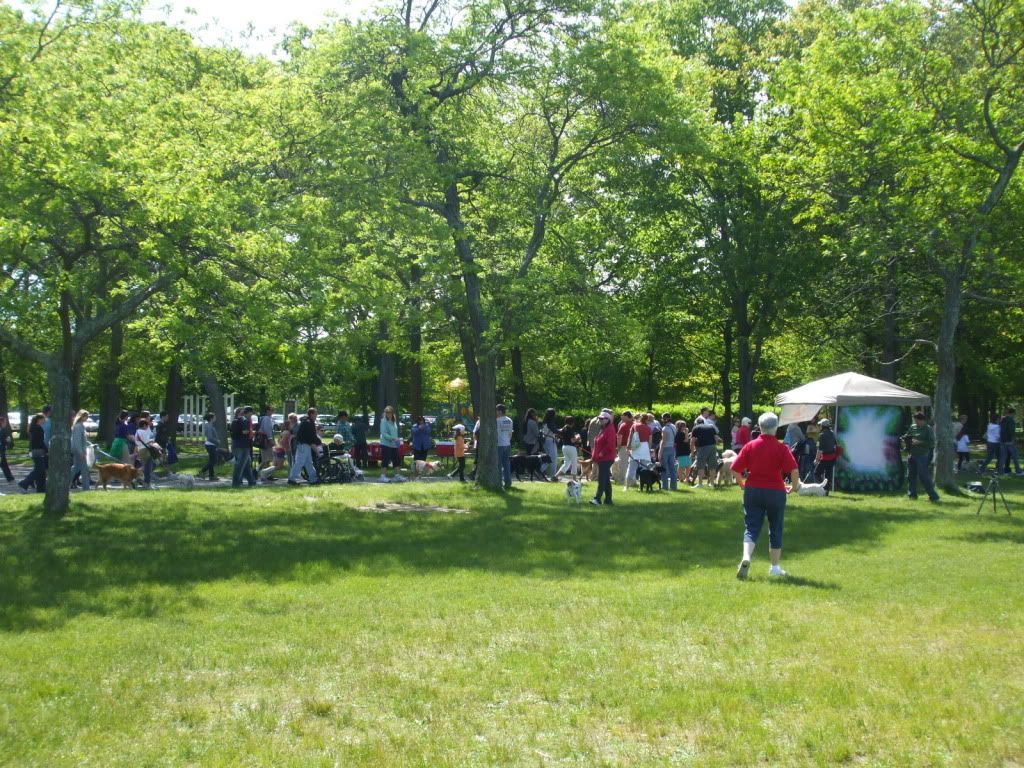

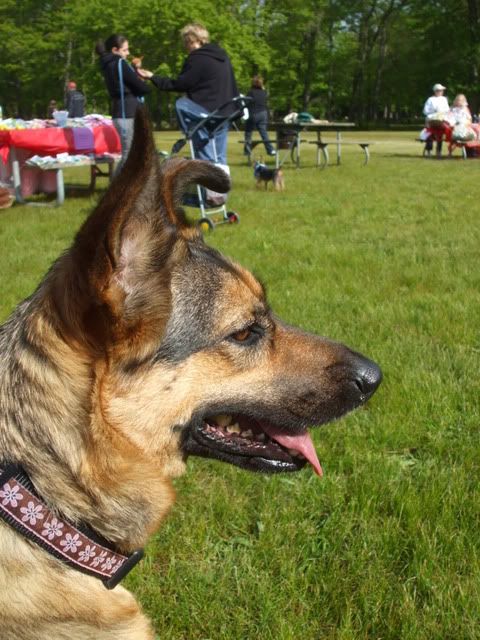
All the dogs were having a great time, were incredibly well behaved and loved the attention they were getting.
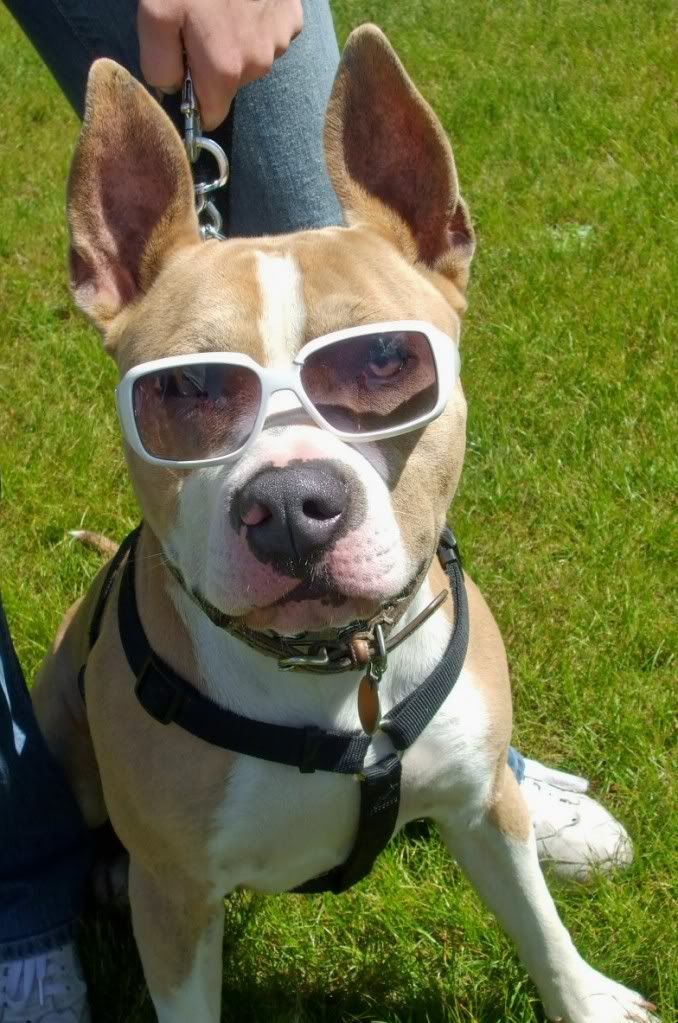

Vendors from across LI were offering some outstanding raffle prizes and giveaways for the attendees. Walk participant Cathy Speranza and her two daughters were lucky enough to win a dog bed filled with all sorts of treats for her bulldog. This free raffle prize was generously donated by Cozy Pet of North Babylon, (www.cozypettlc.com), a member of Long Island Pet Professionals.
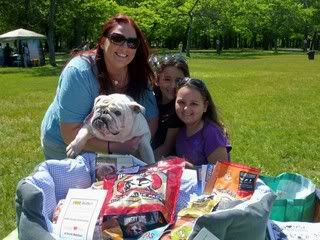
Elena Huber, the Coordinator of the Long Island Chapter said, “We are so happy with the turnout today, it’s even bigger than last year, and everyone had a really great time. We are looking forward to next year!”
If you couldn’t make this pawsome event or would like help, donations can still be made to The Leukemia and Lymphoma Society, for more information on how to do so go to: http://www.leukemia-lymphoma.org/all_page.adp?item_id=551081.
Or Contact Elena Huber by email Elena.Huber@lls.org or call 631.752.8500 x13.
May 15, 2010
By Nancy E. Hassel of LIPetPlace
Did you know that today, Satuday May 15th, you can go to a beautiful winery on the North Fork and enter your mutt into the 3rd Annual Cutchogue Canine Classic? Held at Castello Di Borghese Vineyard and Winery, 17150 County Road 48/North Road in Cutchogue. Anyone can enter their dog in a variety of unique & silly competitions, including: ‘Best Mutt,’ ‘Best Purebred,’ ‘Best Rescue,’ Best Kisser,’ ‘Best Lap Dog over 60 lbs,’ Best Pet & People Look-alike,’ and a lot more categories! Of course prizes will be awarded!
The event is a fund raiser for local shelters and the Guide Dog Foundation. There are also doggie demonstrations, education, food, raffles, and craft vendors, and of course delicious wine inside the winery.
This event is a lot of fun, and a great way to get out with your dog and enjoy the beauty of the North Fork. For more information you can go to the official website: www.cutchoguecanineclassic.com.
The event is all day from 10am – 5pm and it is $10 to enter your dog! General Admission: Adults $5 Children $3. No admission to visit craft vendor booths. Woof!
By Nancy E. Hassel, LIPetPlace.com
Baby it’s HOT in here!
Summertime, summertime, sum-sum-summertime! Summertiiimmmme! Okay so it may not quite be summer yet, but on beautiful warm spring days that hint that summer is coming, our minds turn to the beach, boating, bbq’s and more. One thing many people tend to forget or not even think of is pet safety and heat. It’s seems like common sense to many responsible pet owners, but there are often people who for some reason disregard pet safety in the heat of the summer or maybe they are new pet owners and just don’t know better.
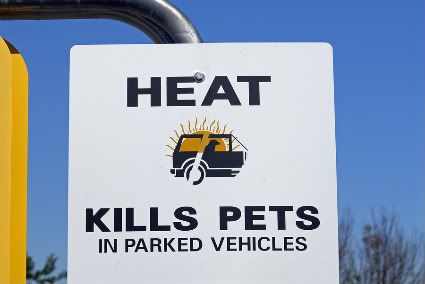
One major concern is pets left in cars. It amazes me year after year, that I still see people on a warm day leaving the windows open a crack and leaving their very furry dogs in the car – while they go into a store. According to a study done by San Francisco University, and another study listed on www.MyDogIsCool.com shows how quickly temps rise during a heat wave. (One of the thermometers used in a study was an actual oven thermometer – that should tell you something). Not to mention if it is humid outside, it doesn’t help matters.
Why not try it yourself, without the dog or any pet for that matter of course. Next time it is a beautiful 75 -80 degrees, go sit in your parked car crack the windows a bit and sit in there for 10 -15 minutes. Don’t cheat and drink water or put the AC on. Now imagine yourself in a fur coat without the ability to sweat. Are you hot yet?
Pet owners should also know if you are caught doing this or someone reports your car with a pet in it to the police, the police have the right to break into to your car with whatever means necessary, call animal control and have your pet seized. You may be issued a summons, arrested for animal cruelty, or more. So the next time you are running up to the supermarket on a hot day, please, please, please leave your pets at home in the AC!
See our next article in a series on other safety issues and tips to keep your pet safe, healthy and happy during the summer months.
May 13, 2010
By Nancy E. Hassel of LIPetPlace
Did you know that May 13 – May 19, 2010 is National Dog Bite Prevention Week? This is an important topic for any dog owner or anyone working with dogs. Dog bites can be prevented, and dog owners should know some basics in order to prevent a bite.
According to the CDC (Centers for Disease Control) there are:
- About 4.5 million people are bitten by dogs each year.
- Almost one in five of those who are bitten :a total of 885,000: require medical attention for dog bite-related injuries.
- In 2006, more than 31,000 people underwent reconstructive surgery as a result of being bitten by dogs.
The most common people inflicted by a dog bite are children, adult males and families with dogs in their house. To knowlegdeable dog trainers, handlers and pet sitters, dog bite prevention seems like an easy thing to avoid, but the every day or new dog owner should learn about warnings and signals a dog may give before they bite. Dog owners and parents should also learn ways to avoid a bite. To help you and your family, especially children avoid being bitten by any dog keep these tips in mind:
- Never leave a infant, toddler or child unattended with a dog. Even if it is your own family dog who you trust, a bite can occur. Sometimes that bite may be out of self-defense, i.e. baby pulls on a tail or ear, tries to take a toy or bone away from the dog, etc. Supervision is best.
- Teach your children not to go up to strange or stray dogs, and if they do see a dog loose, to not run from it. Kids should remain still, or “make like a tree.” Running and screaming from a dog can cause a dogs prey drive to kick-in, or start a game of chase, and the dog can knock the child down and hurt them. Even if it’s not out of aggression on the dogs part.
- Tell your children to always ask before petting a dog. Teach them to ask their parent or guardian, first then the dog owner. Some dogs are not used to kids, or can be fearful of chilren – and do not like being petted by a stranger or child. A simple, “Can I pet your dog?” can save a lot of trouble. (Some owners may say, “No I’m sorry,” teach children to respect that.)
- Children should never pet a dog as it’s walking by. Children tend to grab at or pet the mid-to tail portion of a dogs back as they are passing by and that can very easily spoke a dog.
- Teasing a dog at any time should not be acceptable by parents. Kids should be taught to respect and care for the dog.
- Consult a dog trainer to come and teach your children how to properly greet a dog, how to pet it, etc. The one at a time rule should also apply. In other words, one child at a time petting the dog. Some dogs can get overwhelmed with too many kids petting it at once. (Of course we all know dogs who love it, but safety first!)
- Some dog warning signs may be slight, a curl of the lip, a quiet growl, hackles on end, and guarding food or a toy. Some fearful dogs may have their tail between their legs, a dog trying to hide or get away from the situation, (backing behind an owner), and could result in a fear bite. Understanding a dogs’ body language and what they are saying is very important for dog owners.
A well socialized, trained and healthy dog is less likely to bite. Training, exercise and regular veterinarian check-ups are very important in a dogs life. Any breed and size of dog can bite so don’t be fooled by breedist statistics. Dogs are a wonderful part of our lives, and children benefit immensivley from having a dog in their life, but keep them safe by knowing how to avoid a bite.
Categories
Archives
Blogroll
Meta