




by Nancy E. Hassel, LIPetPlace.com
Found a lost dog…Now what?
If you see a loose dog, for most pet lovers our first instinct is to stop and see if we can help get the dog back to its owner and back home. Does the dog have a collar with ID tags and a number to call to reunite the pet with its family? Many times a dog gets loose with no visible ID, and no way to immediately get it back home.
Very recently a there was a sad story about a lost dog on Fox Five found in Nassau County. When a good samaritan saw the dog loose in the road, he wanted to help the dog out of harms way and get the dog back to its owners. So the man stopped and coaxed the dog to him and brought him home. He and his fiancé decided to post the dog in the Pets section of Craigslist.com, and with in a few hours the “owner” contacted them claiming it was her dog. They met the next day in a shopping center nearby so she could pick up ‘her’ dog. A couple hours after the dog was reunited with the supposed owner, the real owner contacted them about the dog. It turns out the real owner only lived five houses away from where the dog was picked up. So unfortunately the dog was given to someone who is not the real owner.
What you can do if you do find a loose dog with no ID:
- If you find a dog in a neighborhood, first and foremost, knock on some doors, it could be the dog was only a house or so away. (Which was the case here, the dog was only 5 houses away). This also goes hand in hand in getting to know your neighbors, and their pets.
- If the dog has no collar or tags, call or go to your local town animal shelter – the dog may be microchipped and most shelters have scanners to see if the dog has a chip and can help relocating the dog. If you are leaving the dog at the shelter as a stray, town animal shelters by law have to hold for a period of time (usually seven days) before the dog can be placed for adoption. This will also give the owner a chance to look to see if there dog is in the local town shelter.
- If the animal shelter is closed, go to your nearest veterinarian office, many vet offices also have scanners.
- If you do post the dog to a community pet section of a website like craigslist or if you post to Facebook – make sure the person claiming the dog is theirs has proof i.e. clear photo’s of the dog, medical records, can identify markings on the dog, maybe a scar from a past injury, if the dog is spayed or neutered or other information that the person can just tell from a picture. (I would ask these questions over the phone before reuniting).
- Watch the dog’s body language during the reuniting – the dog on the video didn’t look overly excited to see its ‘owner’ it almost seemed like it didn’t really know her. The majority of dogs are so happy, excited, and ecstatic to see their owners again, even after just 5 minutes apart – so watch for that. Over excitement is not a tell “tail” sign that the dog is theirs, but could help the rescuers spotting a fraud if the dog is acting shy or scared of the person claiming it is their dog.
- Does the dog respond to the name? The horrible person in the video stealing the dog called the dog “baby” and anyone can call a dog baby.
To prevent the above from happening, dog owners can follow these tips:
- Have a collar or harness with ID tags on your dog at all times, with updated contact information. (Do not use a training collar for this purpose – a flat buckle collar is best.)
- Have your dog licensed with the state (dog licenses are required by state law and can be acquired at your local town clerk’s office), this is another form of ID and easy for town shelters to identify the dog and its owner.
- Does your dog escape, climb over or under your fence? Be sure you have a secure yard if you know your dog is an escape artist. Always check to see if your gate is securely closed, and teach your kids this as well.
- If your dog is an escape artist and known for getting out, be sure to get the dog microchipped.
- Is your dog spayed or neutered? Dogs that are not “fixed” tend to want to get out and mate – so another good reason for spaying and neutering your pets.
- Does your dog know where he or she lives? This may sound really silly, but if you never walk your dog, and it’s only a house dog or dog that only goes in your yard, the neighborhood could be a whole new big world for your dog to explore, easily get lost, not recognize anything and if you never walk your dog – how does your dog know which house is theirs? (People who walk their dogs on a regular basis know that their dog could lead them right back home!)
- Get to know your neighbors! If you know your neighbor has a German Shepherd and you see a loose German Shepherd in your neighborhood, chances are it is their dog.
We are hoping that the woman in the video tape is found comes forward and the dog Lilly is reunited with its owner very soon. If you know who the person who stole the dog is, call Crime Stoppers at 800-244-8477.

by Robyn Elman, President of In Home Pet Services, Inc.
What do Pet Sitters do in a Blizzard?
This has been a rough winter so far with two big storms a rain and ice storm and more snow forecasted to hit our area again. They mayor says to stay off the roads. The schools are all closed and kids get to stay home with their parents or people are away on vacations. So what is a pet sitter to do?
When pet sitters have clients that are away on vacation they, and more importantly their pets, are depending on the sitter to come for their care. Dogs like Sophie the beagle still has to go outside to do her business, get feed, fresh water, love and attention, and cats like Bella needs her daily medications, litter changed, etc.
Dedicated professional pet sitters go with shovels in their cars to each appointment, and if the roads are not plowed they take the train or bus; and if that fails – as in the last blizzard in New York when there was no public transportation – they walked! But pet owners who are hiring pet sitters should also take into consideration the following tips to ensure safety for their pets and their pet sitters:
If you are away during the winter and are relying on a pet sitter, you can make things safer for them, ensuring your pet can get their care.
- Have someone “pre-hired” to shovel in case it snows. Have them shovel your driveway with a path to the road as well as the sidewalk in front of the house, and a path to the door.
- Leave pet safe salt containers for the people shoveling your walk and driveways (with directions to only use that type of salt) – and leave an extra container or two inside incase the pet sitter needs to add additional salt to ice or snow.
- Always have the numbers to your power company and/or heating company displayed for the sitter to call if there is an outage.
- If there is a power outage, or no heat at your home, make sure you have arrangements with your pet sitter so that they can take the dog, cat or bird home with them to board in case of a no heat emergency.
- Extra leashes, collars, dog or cat carrier is great to have available in case the sitter does have to take the pet with them.
- Have the number to the nearest 24-hour vet emergency hospital displayed as well.
- Keep a shovel handy for your sitter to maintain the paths.
- If you have a regularly scheduled dog walker and you are staying home from work – remember to call them to cancel.
- Make sure you have enough pet food, litter, pet medication and bottled water in case you’re stuck and can’t get back on your schedule day due to weather.
Pet Sitters and Dog Walkers truly work through rain, and snow, day and night. Planning ahead during the winter will make the care of your pet a little easier for your sitter to stay safe while caring for your pet. The tips above will make a big difference in the life of your pet and pet sitter during another blizzard.

Dangerous roadways are tough enough on pet sitters.
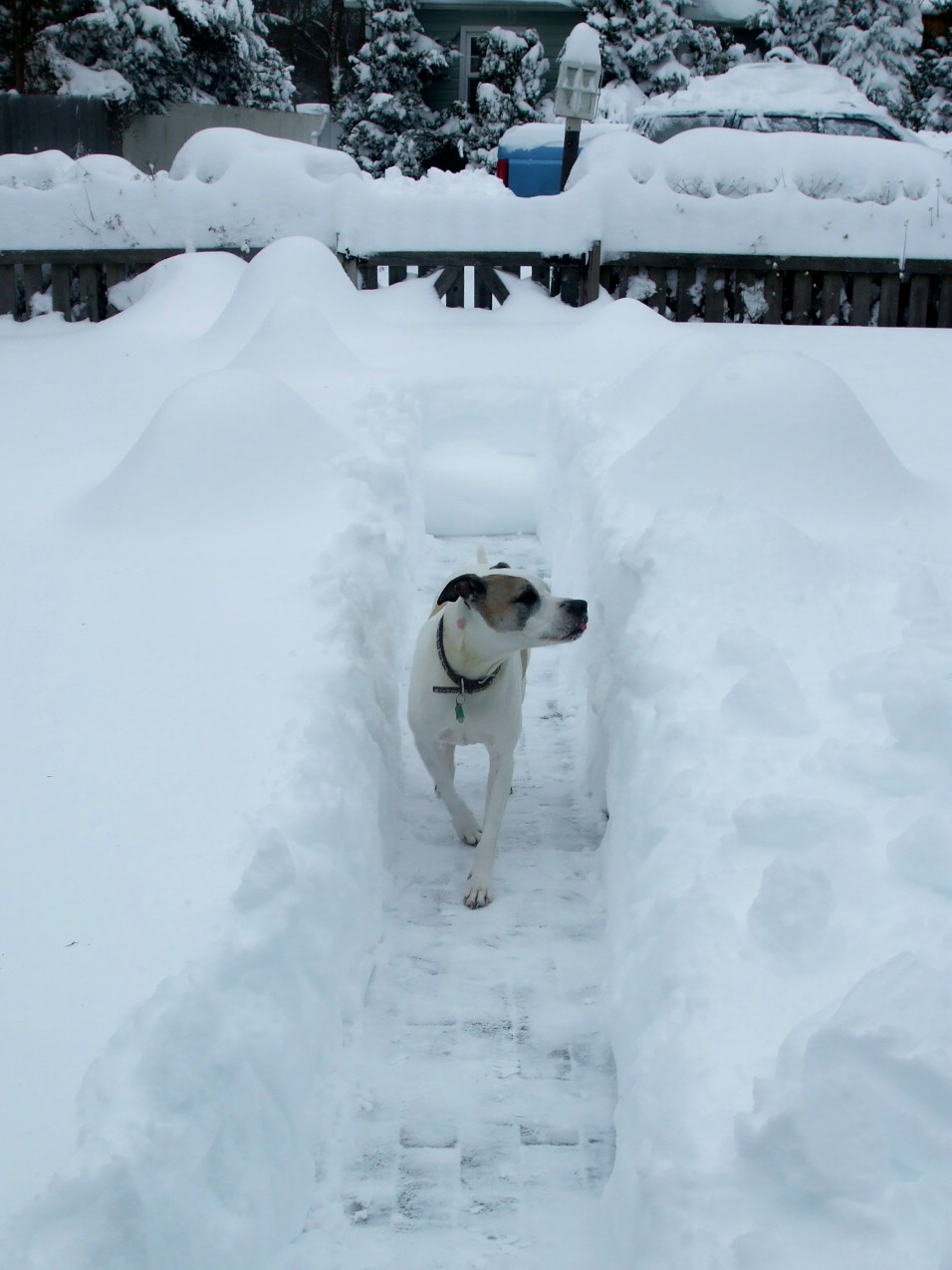
Don't leave it up to your pet sitter to shovel your house out.
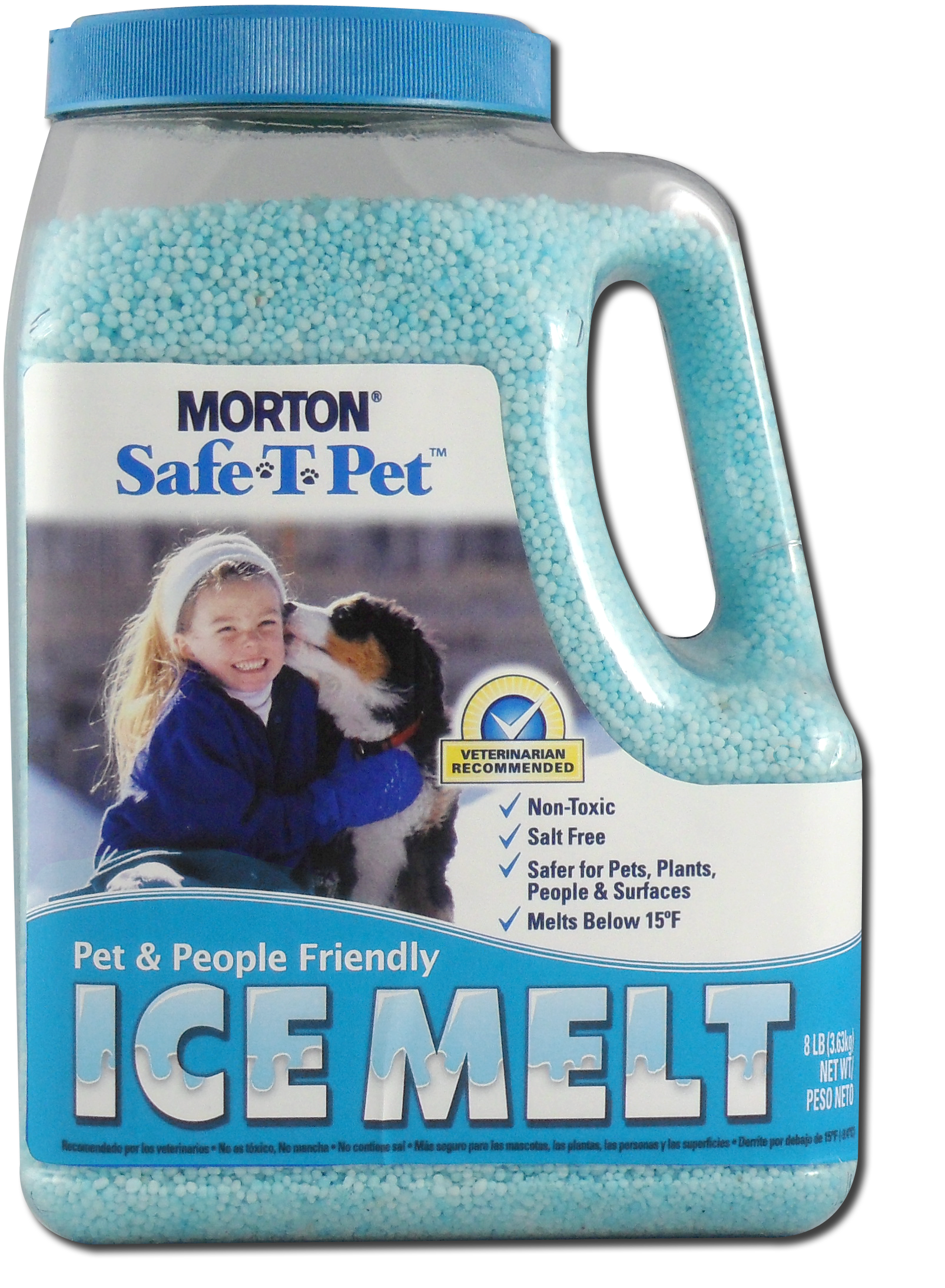
When we think of Morton’s salt we usually think of seasoning our food with it. But this year they have a new product just for pets Morton’s Safe-T-Pet™ which is a safe non-toxic ice melt to de-ice the winter wonderland outside your door. Morton Salt, the brand consumers have trusted and welcomed into their homes for more than 100 years, has developed a full line of specialty ice melt blends and salt-free ice melt products to help make your winter season more manageable and less stressful for you and your pets. See below for some excellent tips for keeping your pets safe through the winter and be on the lookout for our upcoming photo contest where you can win an 8lb container, (and lots of other prizes), of Morton’s pet and people friendly ice melt.
Keeping Pets Safe This Winter
Walking in a winter wonderland can be hazardous for our four-legged friends. “The winter months can be a very dangerous and uncomfortable period for pets,” says Dr. Sharon Gwaltney-Brant, a veterinarian and board-certified toxicologist. With the help of Dr. Gwaltney-Brant, Morton Salt, Inc. provides a few tips for keeping your pets safe this snowy season:
- Remember Their Tags – Dogs may love to frolic in the snow, but they can easily lose their scent and become lost in all that white. More dogs go missing in the winter than any other season, so keep them on a leash and ensure they are always wearing an ID tag.
- Protect Those Paws – The salted sidewalks and streets are very hard on pets’ paws – but there is a solution. Morton® Safe-T-Pet™, developed with veterinarians, is a salt free and chloride free ice melter which melts below 15 degrees Fahrenheit. Its urea-based, organic formula is non-toxic and non-irritating to pet’s paws and stomachs. Some other ice melters on the market mislead consumers regarding how well the product melts and how safe the product is. For example, when testing was conducted by Michigan Technological University Keweenah Snow Research Center, the Safe Paw™ ice melt product did not melt snow and ice at sub-zero temperatures as claimed. Other brands claim to be pet-safe but actually contain chlorides which can be harmful to pets digestive systems if ingested and which can be painful or irritating to pets’ paws. So make sure you look for a chloride free melter from a company you can trust to validate claims and put safety first.
- Avoid Toxic Temptations – The sweet taste of antifreeze solution is attractive to pets, but is highly toxic even in the smallest amounts. Be sure to keep all chemicals sealed on a high shelf, away from your furry friends, and clean up spills as soon as they happen.
- Winter Weight, Be Gone – Just like humans, animals are less active in the winter and don’t burn as many calories. Keep your pets healthy by reducing their diet to avoid winter weight gain. Speak with your veterinarian about proper diets during “hibernation” season.
- Warm Home, Cold Floors – It is important to remember that although your home may be warm, there may still be drafty areas. Make sure your pets have something soft to sleep on (away from drafts) to protect them from the cold floor.
- Holiday Treats for Humans Only – When throwing those much anticipated holiday parties, be sure to keep all chocolate, macadamia nuts, alcohol and even mistletoe and holly berries out of reach. Although seemingly harmless –these can be dangerous if ingested by pets.
- Running Out, Be Back Soon – Do not leave your dog in a car during the winter months. This enclosed space freezes fast, so if you are running errands be sure to leave your pet at home in the warmth of your home or keep them by your side when out and about.
- Wipe Down To Stop Whining – In addition to selecting a pet-friendly ice melter, be sure to towel off your pet after time outside to remove salt and other irritants from their paws and skin. At the same time, inspect the paw pads for any collection of snow or ice to ward off winter weather problems.
by Nancy E. Hassel, LIPetPlace.com
Dog training for Winter safety
Here on Long Island we are so lucky to be surrounded by water, have many lakes, ponds streams and natural areas to enjoy with our pets. Recently after reading a story in Newsday about a Shirley man who’s 2 off leash Husky’s ran after some geese over the thin ice of a pond and fell through. In an effort to save his dogs the owner also fell through into the cold water. The owner admitted it wasn’t too smart, not thinking the ice was too thin or the cold water too deep and found himself in, well, deep water. Thankfully this story has a happy ending where a neighbor happened to hear the man yelling for help and the man and his dogs were all rescued and are all okay. But it made me think, how many people teach their dogs not to go on the ice? It’s not something you think about every day, especially if you get adopt a puppy or dog in the spring, summer or fall. It made me think back to how I taught my first dog, and dog I currently own to be safe near ice.
When I got my first dog as an adult, a young female puppy Doberman in the late summer of 1995, I did a lot of training with her in many different places. One place more than others, happened to be a park with wooded trails, streams and a lake. That first winter, the then 8-month old puppy was very curious about the strange frozen occurrence that the lake had become. While wanting to show her the ice, I also didn’t want her to think it was safe to walk out onto. So without taking a dog training course on winter safety and going on my instincts, I let her sniff the ice, put a front paw or two on it, but never ever let her walk out onto the ice. Using various commands, “off” if she ventured more than one paw onto the ice, or “stay” to keep her by me, or using “eh ah” if she tried to step on it. Of course this was all done while she was on a leash and giving her verbal praise as a reward. I also let her step on a frozen part right near the edge that I knew would break apart, you know those couple inches of water at the edge that freeze but can still be cracked pretty easily – showing her that it would break. Doing this repeatedly throughout the winter months, trained her not to ever step out onto the ice. Each winter after that I would do a refresher near the first frozen body of water we came upon. I was lucky to have one ridiculously smart dog, who learned quickly and seemed to understand the danger. She was also trained to heel, so when in the presence of ducks, geese or any other wildlife she would not chase an animal. Of course a dog being a dog, she still had instincts to want to chase but having her trained on a verbal recall, helped in having to worry if she did get off leash near ice. I did all these same winter training rituals with my current dog, and he too learned quickly, and it didn’t hurt that he was scared of the ice to begin with. (He also learned by watching her not go on the ice.)
You also have to keep in mind what breed of dog you have too. If your dog was specifically bred for hunting, chasing out birds or is a water dog, you still want to teach your dog winter safety training. Just because your have a Chesapeake Bay Retriever doesn’t mean it can get out of a dangerous situation like falling through ice in a middle of a lake.
Winter can be a lot of fun for us and our dogs, but teaching a dog to stay, come on command and never letting your dog off leash near thin or thick ice, are vital to keeping our dogs safe – and ourselves for that matter. Now that the weather is getting cold enough for ice to begin to form across many of our lakes, ponds, and bays – think about training your dog with winter safety in mind. If you are not sure how to do this properly, consult a dog trainer and ask them for a winter safety training session or two.
Another thing a pet owner should know, whether your pet is a dog or a cat is pet first aid and CPR – especially if your pet falls through ice. We are fortunate to have a local certified Pet Tech, Robyn Elman that teaches a class in pet first aid and CPR, including what to do if your pet gets frostbite and hypothermia. The vital information taught in the class has already saved the lives of a few pets of past class participants. These pet owners who knew what to do in an emergency situation, all thanks to the information they learned in Robyn’s class. To find out more information on the upcoming January 22, 2011 class click here. Interested parties should sign up soon, as this course fills up fast and is offered about every six weeks.

This dog should be leashed!
by Nancy E. Hassel, LIPetPlace.com
This is the time of year when we as humans indulge on all kinds of goodies, from Thanksgiving turkey, trimmings, pumpkin pies and a lot of food we would not normally eat on a daily basis. A lot of dog owners think they should give our dogs whatever we are eating as their holiday treat. You may feel guilty with those puppy eyes looking back up at you while they are licking their chops, but wait, stop and remember that guilt is a human emotion. Indulging your pet with all the yummy goodness of a Thanksgiving meal, could just have you spending that night in the ER for pets.
Some dogs, if they are not used to eating turkey, pumpkin or sweet potato pie, can get sick from it. So make sure you refrain from giving your dog foods they are not used to and also ask your guests to do the same. Dogs are better off eating what they are normally fed during the holiday season. With the rushing around in this busy time of year, you may not notice your dog not feeling well because someone gave him the turkey thigh. If you really want to give your dog a special treat, go to your local pet store and buy a dog treat – make sure it is veterinarian approved and made in the USA and don’t leave your dog unsupervised with it. This time of year, veterinarian offices see a pretty big spike in visits from gastrointestinal problems i.e.: dogs not used to eating table scraps, blockage from ingesting a toy or toy part (while no one was watching) and it could require surgery.
Before your friends and family are coming over for Thanksgiving, take your dog for a nice long walk, you know the saying goes, a tired dog is a good dog. There are many beautiful places here on Long Island to do so, and it will be good for you to. Keep your dog healthy on Thanksgiving and throughout the holiday season. Happy Thanksgiving!


Categories
Archives
Blogroll
Meta